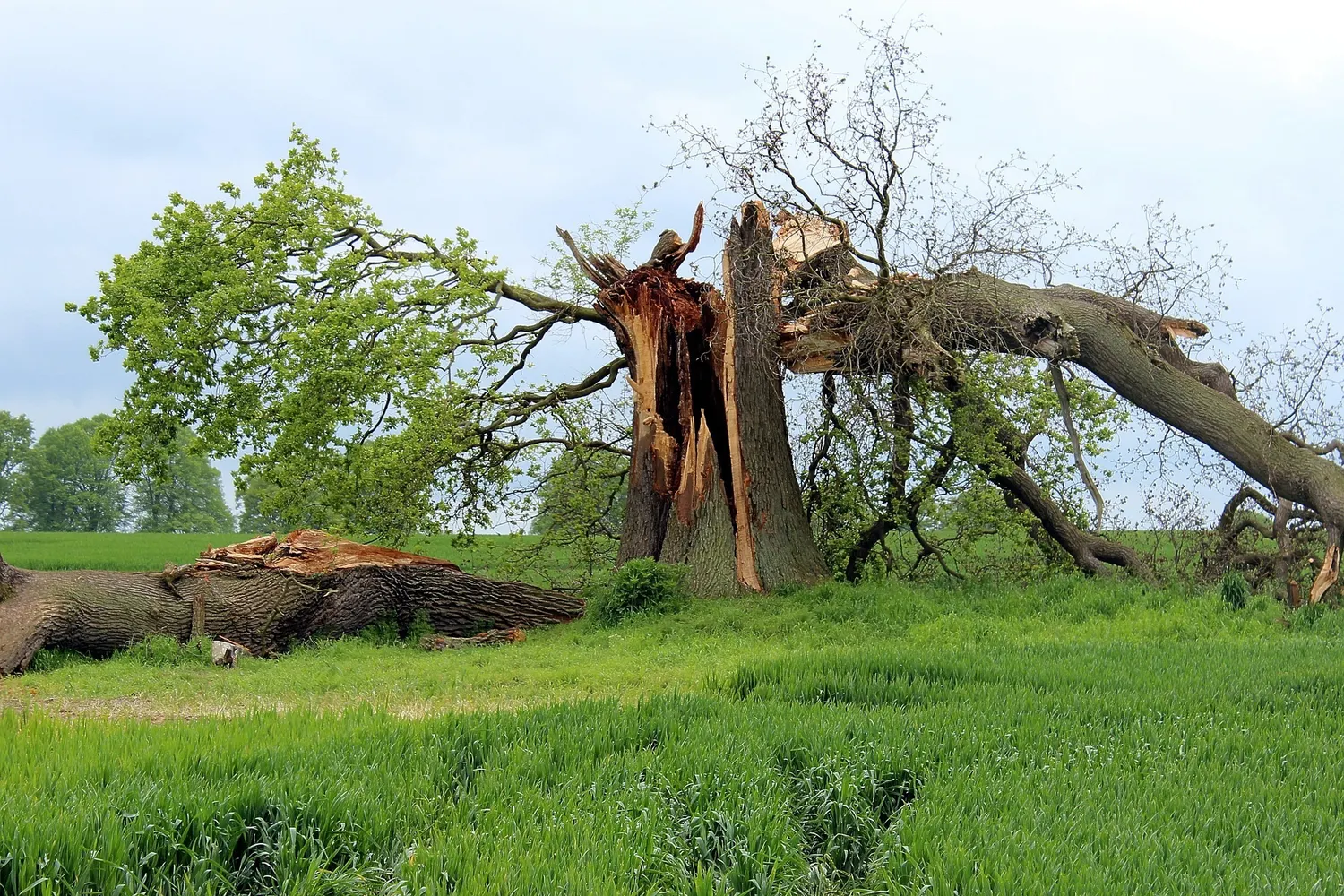
Equipment for Storm Wood
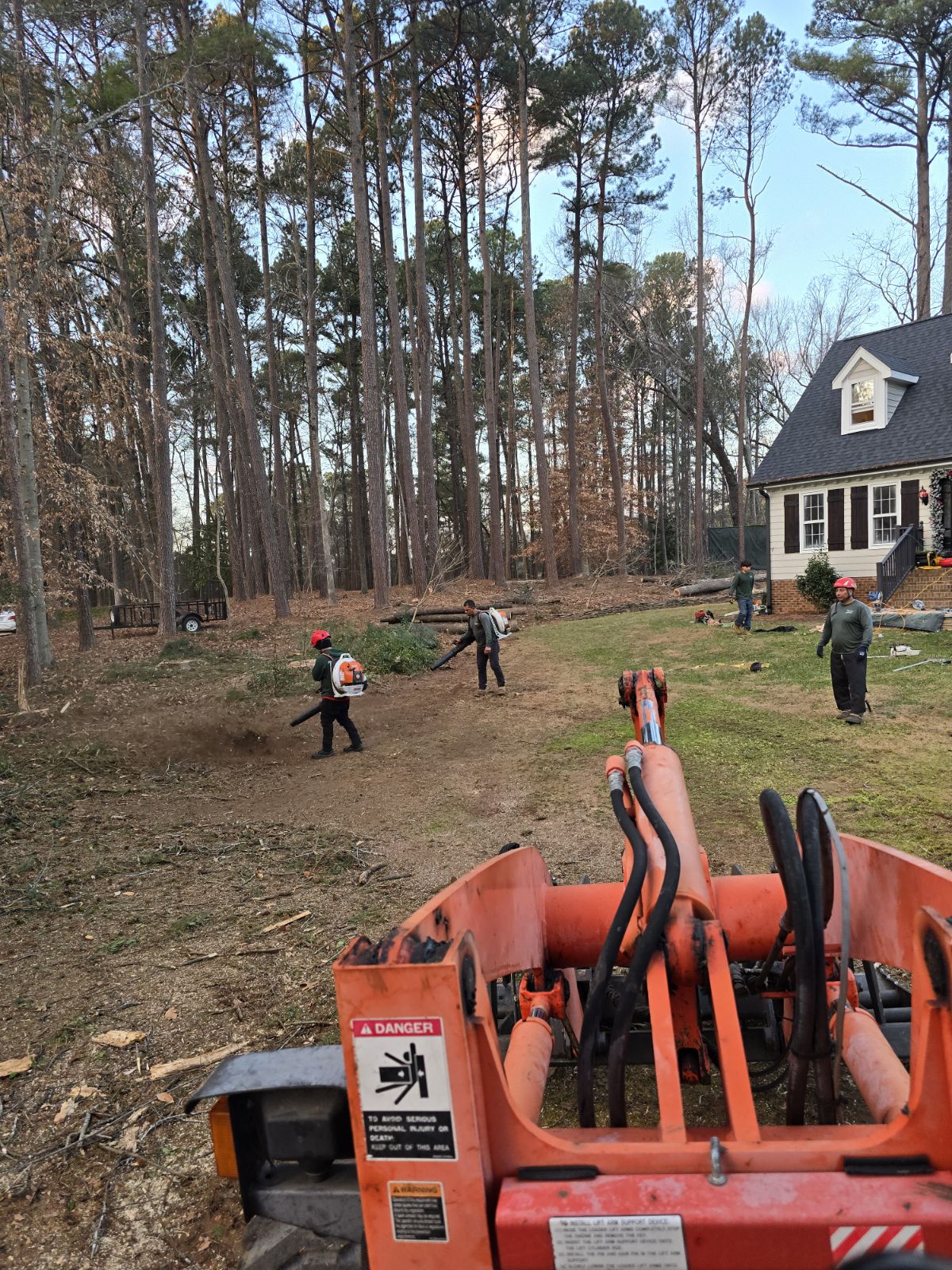
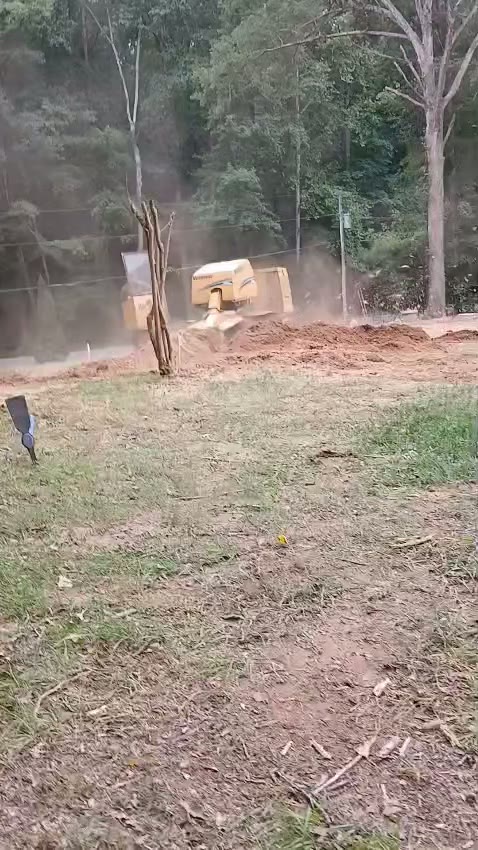
Tangled, twisted storm wood is where equipment earns its keep. A climber removes hangers and takes damaged trees down in sections. Where a broken tree sits over a roof, our crane lifts it clear.

After a hurricane band or a line of summer thunderstorms, the obvious damage lies on the ground. The more dangerous damage is still up in the trees: broken limbs caught in the canopy, which tree crews call hangers, and trunks cracked or loosened at the roots. Those can drop days later with no wind at all.
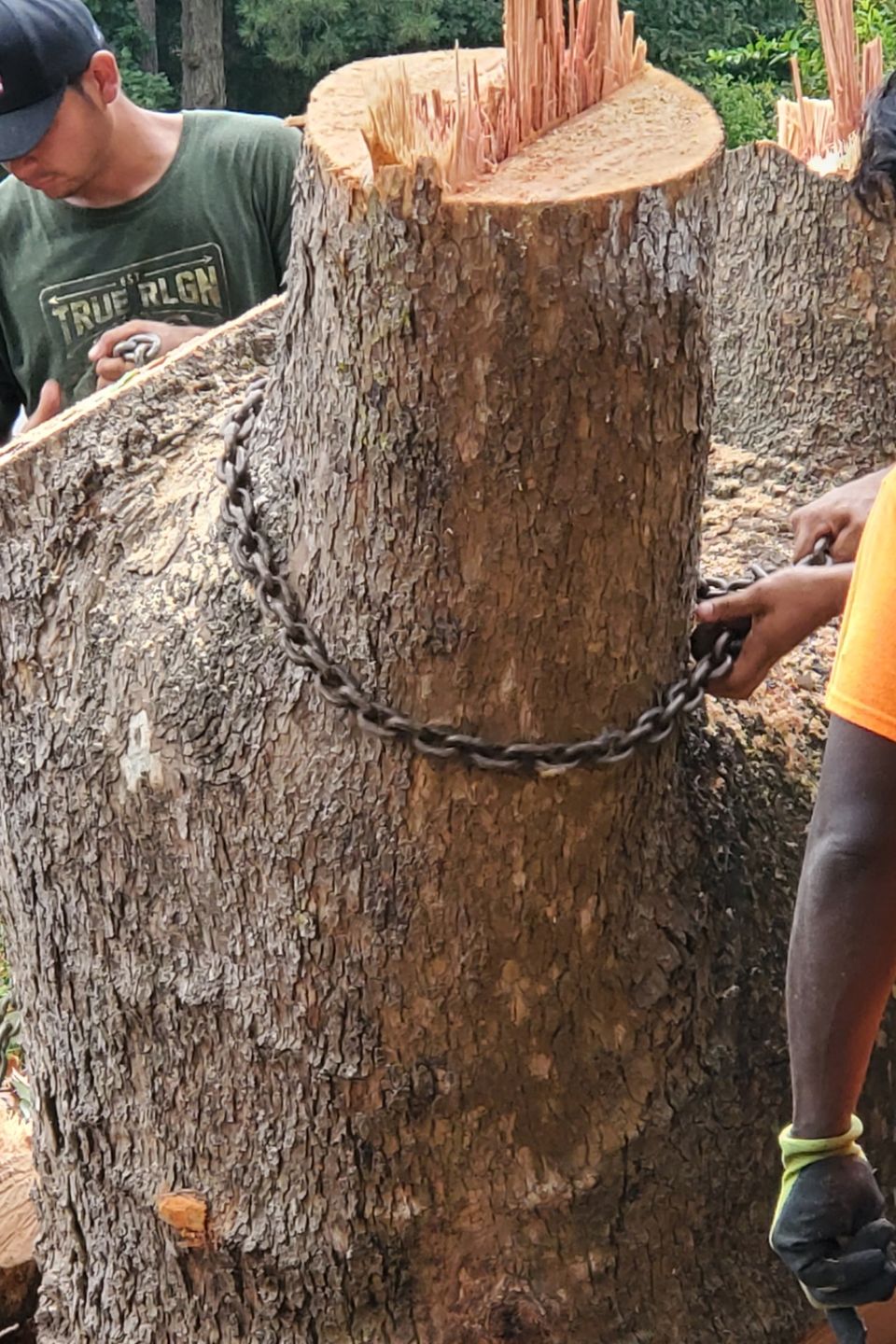
Storm wood is also under tension. It is twisted and pinned in ways that make a saw kick or a trunk spring back when cut, so the cleanup after a storm is the wrong time to learn tree work.
Storm damage tree removal is the work of making a property safe after severe weather, and then cleaning it up. It covers trees that fell, trees that broke, and standing trees the storm weakened. The crew then works in that order, so the risk to your home drops with each hour on site.
Every storm job follows the same order of risk:
anything on or leaning over the house, garage or driveway
hangers and broken tops still up in the canopy
cracked or uprooted trees that are standing but unsound
downed trees and limbs on the lawn, fences and beds
Tangled, twisted storm wood is where equipment earns its keep. A climber removes hangers and takes damaged trees down in sections. Where a broken tree sits over a roof, our crane lifts it clear.
Photograph the damage before cleanup starts: the tree, what it hit and the wider yard. Send those photos to your adjuster along with our written estimate, and keep a copy of any invoice we give you for your records. If the claim requires an arborist's report on whether a tree can be saved, we will note that in writing at your request.
Not every storm-bent tree has to go. A tree that tipped slightly in soaked soil, or lost one limb out of many, may only need cleanup cuts and time. We tell you which trees we would keep and why, so you are not paying to remove trees that will recover on their own. Storm work tends to come in waves, because one storm hits hundreds of yards at once. For everything else, you get a straight answer about when the crew can reach you, not a vague promise. We do not accept payment until after you have verified our work and you are satisfied. If the storm also left piles of leaves and small debris, ask about hauling those on the same visit.
Our equipment yard and home office are both here in the Triangle, and we answer the same phone number all year, storm or no storm. Our 62 Google reviews were built up over years of tree work in this area.
Be wary of anyone who asks for payment before storm work starts. We take nothing until the damaged trees are down, the yard is clear, and you have verified our work and you are satisfied.
We clear what could hurt someone first, then whatever blocks access to the house, then the mess. You watch the danger disappear first, well before the brush piles do.
Storm wood is the riskiest wood a crew will cut all year. Our crew is covered by workers' compensation, with liability and equipment insurance in place, and you see the proof before we start.
A clear plan from the first conversation through the final walkthrough.
A real person answers. Tell us what is down, what is leaning and what is on a structure. Trees on houses are handled as emergencies.
We sort every damaged tree by risk and send your estimate within 6 to 24 hours. Photograph the damage for your insurer first.
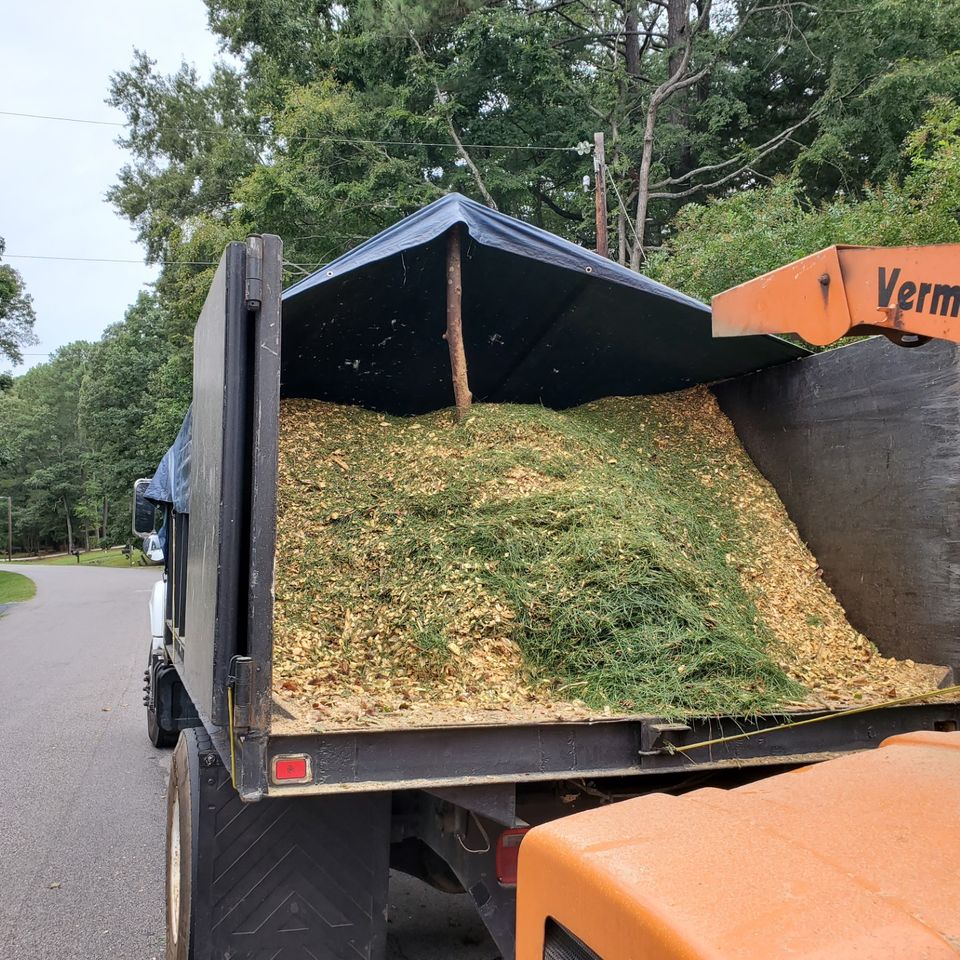
Trees on structures and hangers come down first, then cracked trees, then wood on the ground, chipped and loaded as we go.
We walk the cleared property with you, and we do not accept payment until after you have verified our work and you are satisfied.
Storm damage tree removal is priced after a walkthrough of the whole property, because storm jobs vary more than any other tree work. The price depends on how many trees are affected, whether they are down or still standing, how tangled the wood is, whether anything rests on a structure, and how much debris has to be hauled.
Homeowners insurance often helps when a storm drops a tree on a covered structure, such as the house or a detached garage. Policies commonly cap what they pay for tree removal and may treat a tree that fell in open yard differently, so check your coverage before assuming it is paid for. We cannot tell you what your policy covers, but we can give you a written estimate to send your insurer.
We take jobs within about 50 to 60 miles of Raleigh. Enter your address to see whether you're in our usual service range.
Reviews quoted exactly as they were left on our Google profile.
Call us with any question about the work or your trees.